The Future of Coding Why Low-Code Tools are Taking Over in 2026
Introduction: The Democratization of Software Development
For decades, the ability to build a mobile application or a complex web platform was a skill reserved for a small elite—those who spent years mastering languages like C++, Java, or Python. But as we cross into 2026, the walls of this “digital fortress” have finally crumbled. We are witnessing the Rise of the Citizen Developer.
In 2026, coding is no longer about syntax; it’s about Logic and Architecture. Low-code and No-code platforms, supercharged by Generative AI, have turned software development from a manual labor of typing lines of code into a visual process of assembly. At Bilanly, we believe this shift is the single greatest opportunity for entrepreneurs in the Horn of Africa and beyond.
1. What is Low-Code/No-Code in 2026?
To understand the future, we must define the present.
No-Code: These are visual builders (like FlutterFlow or Adalo) where you drag and drop components—buttons, lists, databases—to create an app without writing a single line of text.
Low-Code: These platforms allow for visual building but provide “hooks” for developers to inject custom logic or scripts (like JavaScript or Dart) to handle complex, unique functions.
In 2026, these tools are no longer for “simple” apps. They are being used to build enterprise-level banking systems, e-commerce giants, and AI-integrated healthcare platforms.
2. The AI Multiplier: How AI Changed the Game
The real reason Low-Code is taking over in 2026 is the integration of Autonomous AI Coding Agents. Previously, you had to manually connect a database to a UI. Today, you simply tell the platform: “I want a leaderboard that updates in real-time based on quiz scores and filters by location,” and the AI generates the backend architecture instantly.
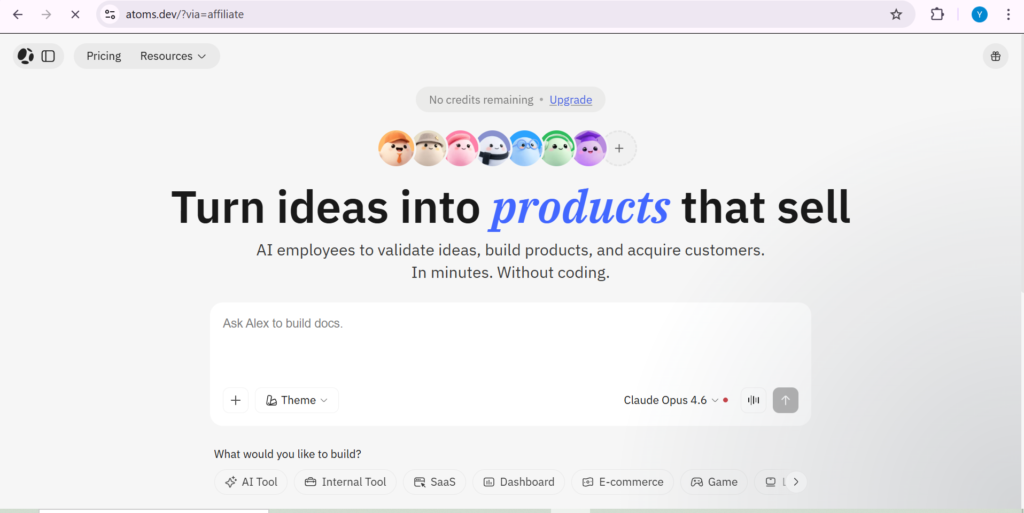
Platforms like Atoms.dev have pioneered this “Natural Language to App” workflow, reducing development time from months to mere hours.
3. Why Businesses are Switching to Low-Code
Why would a billion-dollar company or a startup in Bosaso choose Low-Code over traditional coding?
Speed to Market: In 2026, if you take 6 months to build an app, your competitor has already launched three versions. Low-code allows you to go from “Idea” to “App Store” in days.
Cost Efficiency: You no longer need a team of 10 senior developers. A single “Product Architect” using low-code tools can achieve the same results, saving up to 70% in development costs.
Easier Maintenance: Traditional code “rots” over time. Security patches and updates are manual and expensive. Low-code platforms handle the underlying infrastructure updates automatically.
4. The Rise of the “Citizen Developer”
In 2026, the most successful developers aren’t just computer science graduates. They are doctors, teachers, and business owners who understand a specific problem and use low-code tools to solve it.
Example: A doctor in a local clinic can build a custom patient-tracking app tailored exactly to their needs, without waiting for a software company to build it for them.
The New Skill: The most valuable skill in 2026 isn’t “knowing Python,” but “Systems Thinking”—understanding how data flows and how users interact with a digital interface.
5. Challenges and the “Hybrid” Future
Despite the hype, low-code isn’t a magic wand for everything. There are still areas where traditional, “Pro-code” is necessary:
High-Performance Gaming: 3D environments still require deep, optimized code.
Custom Security Protocols: Highly sensitive government or military systems often require hand-coded, audited security layers.
The future of 2026 is Hybrid. The UI and standard logic are built with Low-Code, while the highly specific, complex algorithms are hand-coded by senior engineers.
6. Opportunities for Somali Youth in 2026
This shift represents a massive opportunity for the youth in Somalia.
Global Freelancing: You can now build high-quality apps for clients in Europe or America using tools like FlutterFlow, charging international rates while working from home.
Local Solutions: From livestock tracking to localized e-commerce, the barriers to entry have vanished. If you can think it, you can build it.
7. Getting Started: The Bilanly Roadmap
If you want to join the Low-Code revolution today, here is the path:
Master the Logic: Learn how databases work (Collections, Documents, and Relations).
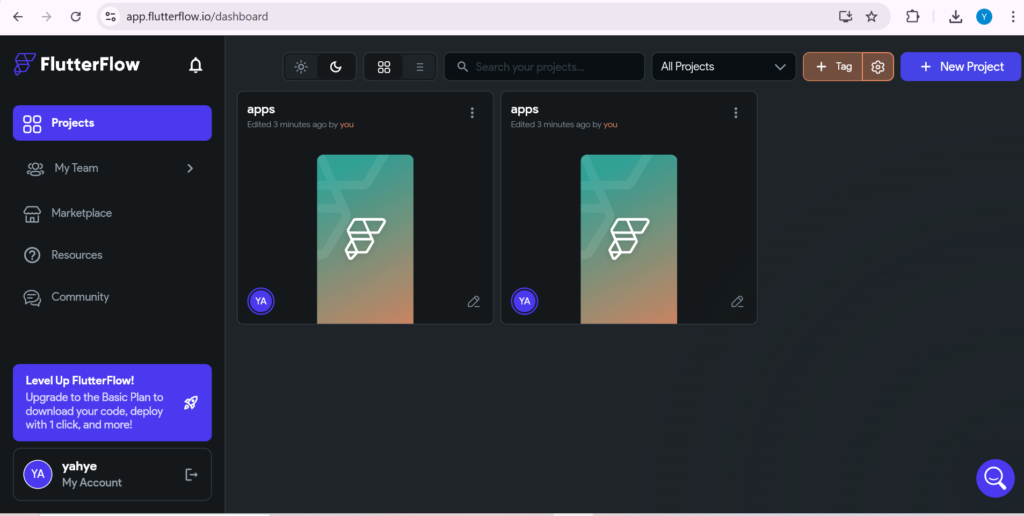
Pick Your Tool: Start with FlutterFlow for mobile orAtoms.dev for rapid prototyping.
Learn Prompt Engineering: Learn how to describe app features to AI agents to generate clean logic.
Build and Iterate: Don’t wait for perfection. Launch a “Minimum Viable Product” (MVP) and improve it daily.
(Caption): Atoms.dev Dashboard: Utilizing Natural Language to generate app components instantly.
Bilanly’s Insight: FlutterFlow is the most powerful tool for building professional-grade applications in 2026.
Conclusion: From Writing Code to Designing Solutions
The “Golden Age” of coding isn’t over; it has just changed its shape. In 2026, the computer is no longer a machine that needs to be told how to work in a foreign language. It is a creative partner that understands our intent.
Whether you are a seasoned engineer or a complete beginner, the Low-Code revolution is your invitation to build the future. At Bilanly, we are committed to providing you with the tools and knowledge to lead this change.
Don’t just use apps; build them. The era of the creator has arrived.