
The Death of the Hard Sell: A Digital Immunity Era
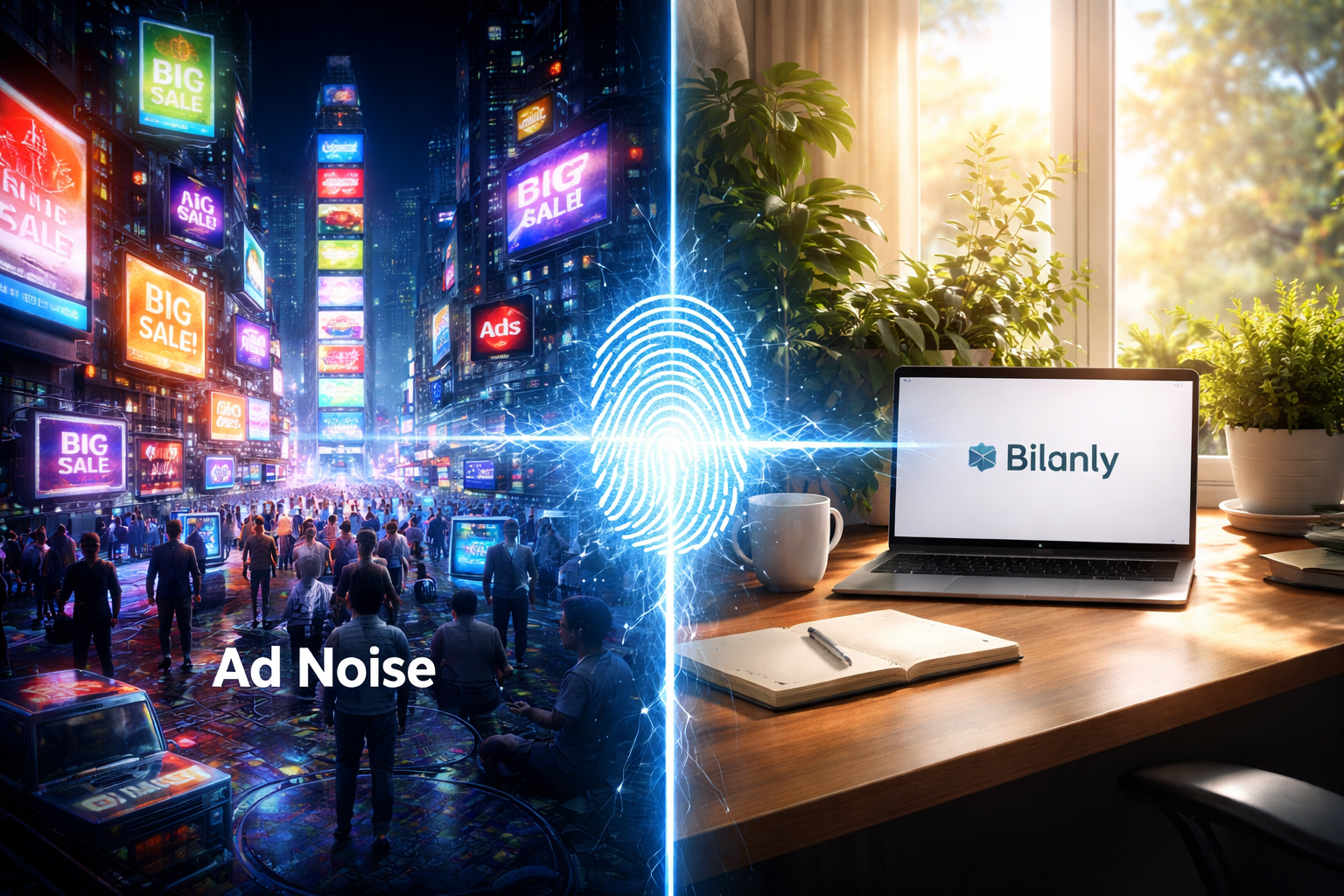
Let’s be honest: when was the last time you actually clicked on a flashy “Buy Now” banner and felt good about it? Probably never. In 2026, consumers have developed a “digital immunity” to traditional advertising. At Bilanly, we’ve analyzed user patterns and found that “Ad Blindness” is at an all-time high. We skip ads, ignore sponsored posts, and have a sixth sense for “AI-generated fluff.”
The marketing landscape has shifted from shouting to connecting. If your business feels like a cold, automated machine, you are already losing. The brands winning today are those that talk like humans, admit their technical limitations, and provide massive value before asking for a single penny.
1. The Psychology of Modern Consumerism: Why We Really Buy
Why do people choose one SaaS tool over another? As an engineer, I used to think it was just about the features. I was wrong. People buy based on how a product makes them feel or who it helps them become.
- Social Proof & Peer Validation: In 2026, we trust a Reddit thread or a LinkedIn comment more than a CEO’s keynote.
- The Reciprocity Principle: If Bilanly gives you a free, high-quality 2,000-word guide on Cybersecurity, you feel a psychological inclination to trust our premium services later.
- Scarcity and Logic: We hate missing out, but we need a logical reason to justify the purchase to our bosses or ourselves.
2. SEO is Evolving: From Keywords to AEO (Answer Engine Optimization)
A common myth in the industry is that SEO is dying because of AI search engines like Perplexity or Google’s SGE.
The Reality: SEO isn’t dying; it’s becoming more human. To rank on Bilanly in 2026, your content must satisfy the E-E-A-T framework:
- Experience: Mentioning specific projects. For example, “When we migrated Somalitips to FlutterFlow, we noticed a 40% increase in speed.” This is something a bot cannot fake.
- Expertise: Deep technical dives. Don’t just say “Marketing is good.” Explain how Zero-Party Data replaces third-party cookies.
- Authoritativeness: Being the go-to source for a specific niche.
- Trustworthiness: Having a clean site, no broken links, and a secure HTTPS protocol.
3. Data Privacy: The Engineering Constraint That Became a Blessing
With the death of third-party cookies, marketers can no longer “stalk” users across the web. While some see this as a nightmare, at Bilanly, we see it as a blessing. It forces brands to build Zero-Party Data.
Zero-Party Data is information that customers willingly share with you. How do you get it?
- By offering high-value newsletters.
- By creating interactive quizzes that help the user.
- By building a community where users feel safe sharing their preferences.
4. Automation vs. Personalization: The “Sweet Spot”
As an Infrastructure Manager, I love automation. But automation without a “soul” is just spam. The future belongs to those who use AI to handle the “boring” tasks (data analysis, scheduling) so humans can focus on the “empathetic” tasks (strategy, community building, and creative storytelling).
The Bilanly Formula:
AI for Efficiency + Human for Empathy = 2026 Marketing Success
5. The 5-Step Marketing Blueprint for 2026
To help you execute this, here is our practical framework:
Step 1: Define Your ICP (Ideal Customer Profile) Stop selling to “everyone.” If you sell tech tools, your customer isn’t “anyone with a laptop.” It’s likely a “30-year-old remote developer who values minimalist design and high-security protocols.” Step 2: The Content Pillar Strategy Create one “Hero” piece (like this 1,500-word guide). From this, you can extract:
- 5 LinkedIn posts.
- 3 TikTok/Reels scripts.
- 1 Weekly Newsletter.
Step 3: Master the “Invisible” Funnel The best marketing doesn’t feel like marketing.
- Awareness: Solve a problem for free (this blog).
- Trust: Show a case study (how we fixed 25 broken links).
- Offer: A natural next step that solves the user’s remaining frustration.
Step 4: Community Over Audience An audience listens; a community talks. Whether it’s a Discord server or a simple comment section, make your users feel heard.
Step 5: Iteration Through GA4 Data Numbers don’t lie. Use Google Analytics 4 to see where users “bounce.” If they leave after 200 words, your intro is weak. If they read everything but don’t click, your Call-to-Action (CTA) is unclear.
6. Case Study: Why Patagonia Wins
Look at companies like Patagonia. They don’t just sell jackets; they sell a philosophy of sustainability. Their “Don’t Buy This Jacket” campaign was a masterclass in honesty. When you align your marketing with a genuine belief, you aren’t just selling—you’re starting a movement.
Conclusion: The Future Belongs to the “Real”
As AI floods the internet with soulless content, the demand for human connection will skyrocket. Marketing in 2026 isn’t about outsmarting the algorithm; it’s about out-caring your competition.
Be bold, be technical, and above all, be human. That is how you pass the AdSense check, and that is how you build a legacy.